Introduction

Gutter installation is the process of fitting a roof drainage system that directs rainwater away from a building’s roof, walls, and foundation. A properly installed gutter system prevents water damage, soil erosion, damp walls, and structural weakening.

In this guide, you will learn how to install gutters step by step, including tools required, slope calculation, fixing brackets, sealing joints, and proper maintenance.

1. Tools and Materials for Gutter Installation

To install a gutter system correctly, prepare the following:

Materials

  • Gutters (PVC, aluminum, or steel)
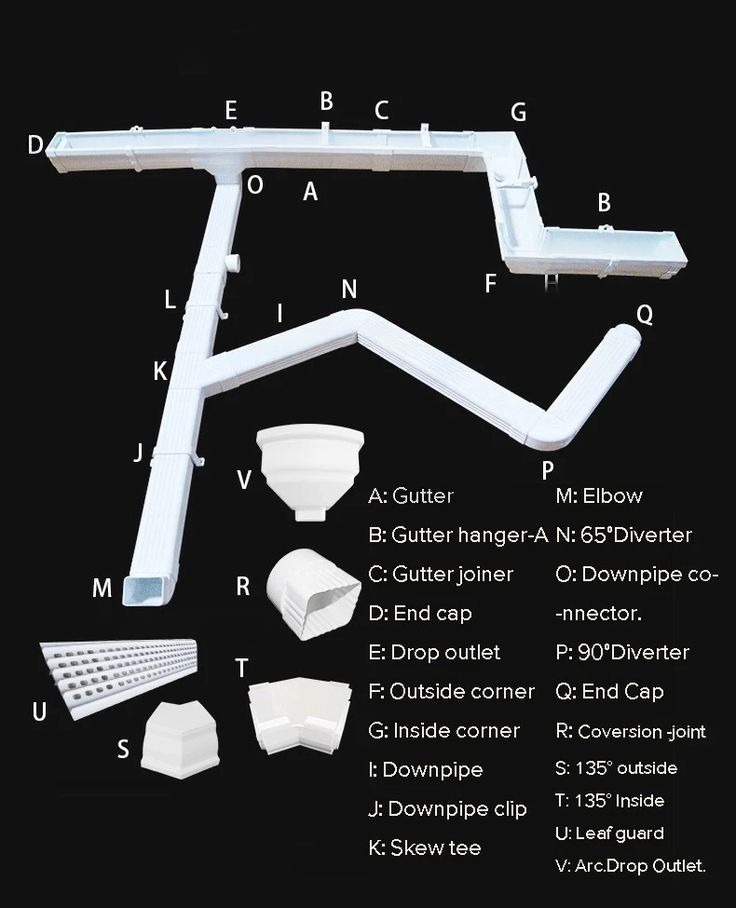
  • Downspouts (pipes)
  • Gutter hangers/brackets
  • End caps
  • Connectors and elbows
  • Waterproof sealant (silicone)

Tools

  • Measuring tape
  • Spirit level
  • Chalk line
  • Drill and screws
  • Ladder
  • Tin snips or hacksaw

Using the correct materials improves durability and reduces long-term maintenance costs.


2. Planning the Gutter System Layout

Proper planning improves water flow efficiency and prevents installation errors.

  • Measure total roof edge length
  • Identify downspout positions (corners or every 10–15 meters)
  • Plan water flow direction
  • Ensure discharge points lead away from the foundation

πŸ“Œ Best Practice: Always plan the full drainage route before installation begins.


3. Creating the Correct Gutter Slope (Critical Step)

A gutter must be slightly sloped to allow water flow.

y=mx+by = mx + b
mm
bb
-10-8-6-4-2246810-10-5510y-interceptx-intercept

For gutter installation:

  • High point: start of roofline
  • Low point: downspout location

πŸ“ Recommended slope:

  • 5mm drop per 1 meter length

This ensures gravity-driven water flow toward drainage outlets.


4. Installing Gutter Brackets

  • Mark bracket positions along slope line
  • Space brackets every 600mm–900mm
  • Fix securely using screws and wall plugs
  • Ensure all brackets follow the slope line exactly

πŸ”§ Strong bracket installation prevents sagging during heavy rainfall.


5. Cutting and Assembling Gutters

  • Measure and cut gutter sections accurately
  • Join sections using connectors
  • Apply waterproof sealant at joints
  • Install end caps securely

πŸ’§ Ensure all joints are watertight to prevent leaks.


6. Fixing Gutters to the Roofline

  • Place gutters into brackets
  • Lock or screw them into position
  • Check alignment and slope consistency

⚠️ Avoid over-tightening to allow for thermal expansion.


7. Installing Downspouts (Drainage Pipes)

  • Attach elbows to connect gutters to vertical pipes
  • Secure pipes using wall brackets
  • Extend downspouts away from building foundation

πŸ’‘ Proper drainage prevents foundation cracking and flooding.


8. Sealing the Entire System

Apply waterproof sealant to:

  • All joints
  • End caps
  • Downspout connections

This step is essential for preventing leaks during heavy rain.


9. Testing the Gutter System

After installation:

  • Run water through the system
  • Check for leaks or overflow
  • Confirm smooth flow to downspouts

βœ” Fix any weak joints immediately.


10. Maintenance Tips for Long-Term Performance

To keep gutters functioning properly:

  • Clean every 3–6 months
  • Remove leaves and debris
  • Check for rust, cracks, or loose brackets
  • Reapply sealant when needed

Regular maintenance extends system lifespan significantly.
Get in touch

Read More

Blogs

PPR Pipes in Kenya: Trusted Quality from Metro Concepts East Africa

As demand for durable and hygienic plumbing solutions grows, PPR pipes in Kenya have become the preferred choice for modern water supply systems. Metro Concepts East Africa, a leading pipe manufacturer in Kenya, produces high-quality PPR pipes and fittings designed for long-term performance in residential, commercial, and institutional projects.

πŸ‘‰ Learn more about our full product range here:
Metro Concepts Pipes & Fittings


What Are PPR Pipes?

PPR (Polypropylene Random Copolymer) pipes are thermoplastic pipes used for hot and cold water plumbing systems. They are joined using heat fusion, creating a seamless, leak-proof connection that performs reliably under pressure and temperature variations.

Unlike metal pipes, PPR pipes do not rust, corrode, or contaminate drinking water.


Key Advantages of Metro Concepts PPR Pipes

βœ” Hot & Cold Water Performance

Metro Concepts PPR pipes for hot and cold water can withstand high temperatures, making them ideal for:

  • Domestic plumbing

  • Solar water heating systems

  • Commercial water distribution

βœ” Long Service Life

With proper installation, PPR pipes offer a service life of over 50 years, reducing maintenance and replacement costs.

βœ” Hygienic & Safe

Our PPR pipes are non-toxic, making them suitable for potable water systems in homes, hospitals, and schools.

βœ” Corrosion & Chemical Resistance

They resist scaling, chemicals, and aggressive water conditions commonly found in Kenya.


Why Choose Metro Concepts East Africa?

Metro Concepts East Africa is a trusted name in locally manufactured pipes in Kenya.

πŸ”Ή Kenyan Manufacturing

Our PPR pipes are manufactured in Kenya, ensuring reliable supply, faster delivery, and support for local industry.

πŸ‘‰ See our manufacturing capabilities:
About Metro Concepts

πŸ”Ή Quality & Compliance

All pipes are produced under strict quality control to meet project and tender specifications for:

  • Pressure ratings

  • Dimensional accuracy

  • Temperature tolerance

πŸ”Ή Complete PPR System

We supply a full system including:

  • PPR pipes

  • Elbows, tees, couplers

  • Valves and accessories

This ensures system compatibility, which is a key requirement in government and institutional tenders.


Applications of PPR Pipes

Metro Concepts PPR pipes are suitable for:

  • Residential apartments

  • Commercial buildings

  • Hotels and hospitals

  • Schools and institutions

  • Industrial water systems

πŸ‘‰ Explore more applications:
Plumbing Solutions by Metro Concepts


Indicative PPR Pipe Price Ranges in Kenya

⚠️ Prices vary depending on pipe size, pressure class (PN rating), quantity, and fittings required.

Indicative price guidance:

  • Small-diameter PPR pipes (20mm–32mm): Project-dependent pricing

  • Medium-diameter PPR pipes (40mm–63mm): Project-dependent pricing

  • Large-diameter PPR pipes (75mm+): Quoted based on specification

πŸ“Œ For official pricing, BOQs, and tender quotations:
πŸ‘‰ Request a Quotation

This pricing approach is tender-compliant and avoids disqualification due to outdated or non-binding figures.


Installation & Tender Best Practices

For optimal performance and tender compliance:

  • Use certified PPR fusion welding tools

  • Follow recommended heating and cooling times

  • Specify Metro Concepts PPR pipes and fittings in BOQs

  • Attach manufacturer data sheets during submission


Why Contractors & Developers Choose Metro Concepts

βœ” Reliable local manufacturer
βœ” Consistent quality
βœ” Competitive project pricing
βœ” Technical support
βœ” Nationwide distribution

πŸ“ž Contact Metro Concepts East Africa today for:

  • Tender documentation

  • Technical data sheets

  • Project quotations

  • Bulk supply pricing

πŸ‘‰ Get in Touch

Read More